Synthetic data certainly sounds Orwellian and there are major concerns about what it means for data quality and the fate of the internet as we know it…. So why are some marketers running at this with such wild abandon? Well in the right hands it can be transformational.
The data quality question
Concerns about data quality are justified. My AMEC colleague Rob Key, founder and CEO of Converseon, has been leading AMEC’s contribution to the Global Data Quality Initiative, addressing the reliability of media, social and customer data used in research and AI.
His work highlights how AI can amplify small errors in source material, while bots and AI-generated content create further risks of mistaking automated output for human opinion. For synthetic audience research, the implication is clear: biased, outdated or incorrectly interpreted inputs can produce convincing but misleading responses.
We need to understand where the source material came from, whose views it captures and whether its meaning has been preserved. We also need to test the resulting models against relevant human research. The sophistication of a simulation cannot, by itself, establish the quality of the information behind it.
All that said, then why is PR Agency One launching One Eval Simulation? Are we mad or something? Well, there is more nuance to it and if you are interested then read on.
Challenging the assumptions behind a campaign
A campaign idea can survive several rounds of internal discussion without anyone seriously challenging the assumptions behind it. Familiarity with a business can make its proposition seem clearer, its benefits more compelling and its customers more predictable than they really are.
Research helps organisations question those assumptions. Yet there is often a gap between the information a team already holds and the decision it needs to make next. Commissioning further research may be justified, but time and budget can limit how many ideas receive proper investigation.
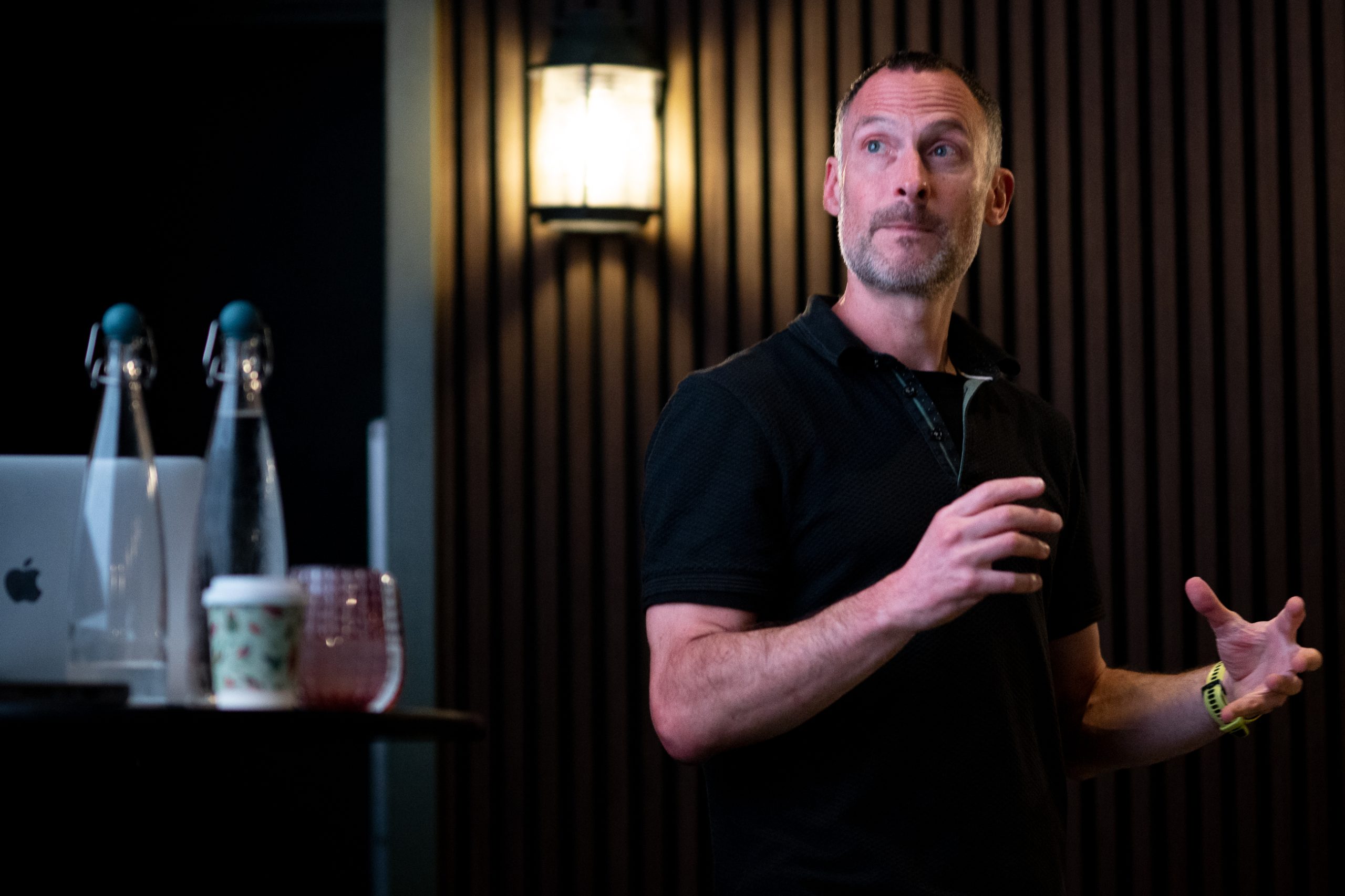
Synthetic audience research offers another way to explore those questions. It was a central subject at PR Agency One’s recent AI event, where The Planning Department examined how the approach works and where it can be useful.
We also introduced OneEval Simulation, our service for exploring possible audience responses to communications and business decisions.
How synthetic audience research works
The starting point is straightforward. Traditional audience research asks people questions or observes their behaviour. Synthetic audience research puts questions and scenarios to a model designed to represent aspects of a defined audience.
Those models use artificial intelligence, informed by relevant research and other source material, to generate possible responses. Teams can compare alternative messages, explore objections and investigate how different groups might interpret the same proposition.
The value lies in what that process helps an organisation reconsider.
Extending what organisations already know
Steve McCarron’s presentation made a useful distinction between organisations with substantial audience research and those working with very little.
For a business that already commissions research, simulation can help extend its usefulness. Interviews or survey findings may inform audience models that can then explore further questions. A team could examine an alternative explanation for a finding, develop hypotheses for its next study or investigate how a revised proposition might be understood.
The original research remains the source of observed audience views. The simulation adds possibilities to investigate.
For organisations with less research, simulation can introduce relevant external information into discussions dominated by internal experience. It can challenge a confident assumption, expose a missing question or suggest an objection that nobody around the table has considered.
That is a useful role, provided the available information is sufficient for the question. A model built on weak or inappropriate material can reinforce the assumptions it was supposed to challenge.
Why context matters
The Planning Department illustrated this problem with an architect specifying roofing materials for a large public-sector project. Understanding that audience requires knowledge of procurement, professional responsibilities, technical requirements and the pressures surrounding a building project. A plausible-sounding response from an “architect persona” does not establish that the model understands those conditions.
This is why the quality of the research, the design of the questions and the judgement of the people interpreting the answers matter so much. OneEval Simulation applies that approach to the decisions our clients face. We begin with the decision itself, identify whose response matters and assess the research and data available. Depending on the brief, that could include customer interviews, stakeholder research, market intelligence and the communications being considered.
We then define the audiences and scenarios, compare responses and examine where the models produce consistent interpretations, disagreement or uncertainty. Experienced researchers and communications advisers assess what those patterns might mean and which questions require further investigation.
Four practical applications
There are four principal applications:
- Research extension – exploring further questions using an existing, relevant research base.
- Market readiness – examining possible barriers, information needs and objections around a product, service or market.
- Message testing – comparing campaign ideas, propositions and language to identify possible confusion or unintended meanings.
- Reputation readiness – exploring how stakeholders might interpret a sensitive announcement, organisational change or developing issue.
For example, a company preparing a new service might have several ways of explaining its value. Simulation could explore how defined audiences interpret each version, what information appears to be missing and which claims invite further questions. The team could use that analysis to refine the proposition and develop a more focused brief for customer interviews.
The same approach can inform a campaign already under way. If an emerging issue changes the context, a simulation can help the team examine possible interpretations of its response and identify questions that need attention.
The output should give the client something useful to work with: a comparison of the options, possible objections, recommended changes and a clear account of what still needs testing.
Where the limits are
There are limits. Models can miss specialist knowledge, understate differences between people and reproduce patterns that have become outdated. Convincing language can also create a false sense of precision. Generating hundreds of responses does not turn them into a representative survey.
Research published by the Market Research Society makes a related point: success with one synthetic method, audience or topic does not establish that it will work in another context. Validation needs to fit the particular task.
We therefore treat simulated responses as hypotheses. Where the decision requires direct knowledge of people’s views, representative findings or an understanding of lived experience, research with people remains necessary.
Connecting simulation to real-world impact
Once a decision moves into the real world, OneEval Impact can assess the relevant changes in audience perceptions, behaviour and organisational performance. That allows us to compare what the simulation suggested with what we subsequently observe.
For PR Agency One, this connects research more closely to creative effectiveness. We can examine an idea while there is still time to improve it, make the assumptions behind it clearer and establish how its performance will be assessed.
If you have a message, proposition or reputation decision to explore, OneEval Simulation starts with three practical questions: what are you deciding, whose response matters and what do you already know about them?